


An organized closet can make a surprising difference in your daily routine. When your clothes are easy to find, you spend less time searching for outfits and more time enjoying the pieces you already own.
Whether you have a spacious walk-in closet or a small wardrobe, creating a practical organization system doesn’t require expensive storage products. With a few thoughtful changes, you can transform your closet into a functional space that makes getting dressed simpler.
1. Start by Decluttering Your Wardrobe
The first step toward better closet organization is understanding what you actually own. Remove your clothes from shelves, drawers, and hanging areas so you can evaluate everything.
Separate items into categories such as everyday essentials, special occasion clothing, seasonal pieces, and accessories. This process helps you identify duplicates and forgotten garments.
Consider donating, selling, or recycling clothing you no longer use. Keep pieces that fit comfortably, suit your lifestyle, and reflect your personal preferences.
2. Organize Clothes by Category
Grouping similar clothing together makes finding specific items much easier. Create separate sections for shirts, trousers, dresses, jackets, sweaters, and skirts.
Within each category, you can arrange garments by color, fabric, or frequency of use. This simple approach creates a cleaner appearance and helps you identify outfit combinations.
For example, keeping all your jeans together makes comparing different washes and silhouettes easier when planning everyday looks.
3. Arrange Your Wardrobe by Color
Color coordination is a popular closet organization technique because it creates visual harmony while simplifying outfit selection.
Start with neutral shades such as white, beige, gray, navy, and black. Then arrange colorful clothing according to your preferred sequence.
You don’t need to create a perfect rainbow arrangement. The goal is to make garments easier to locate and identify combinations that work together.
Organizing by color can also reveal which shades dominate your wardrobe and where unnecessary duplicates exist.
4. Use Matching Hangers to Save Space
Hangers influence how clothing is stored and how organized your closet appears. Choosing similar designs can create a more consistent arrangement.
Slim hangers may help maximize hanging space, especially in smaller wardrobes. However, heavier garments often require sturdier options that provide adequate support.
Avoid overcrowding the hanging area. Leaving some space between clothes makes removing items easier and helps prevent unnecessary wrinkles.
5. Fold Sweaters and Delicate Clothing Properly
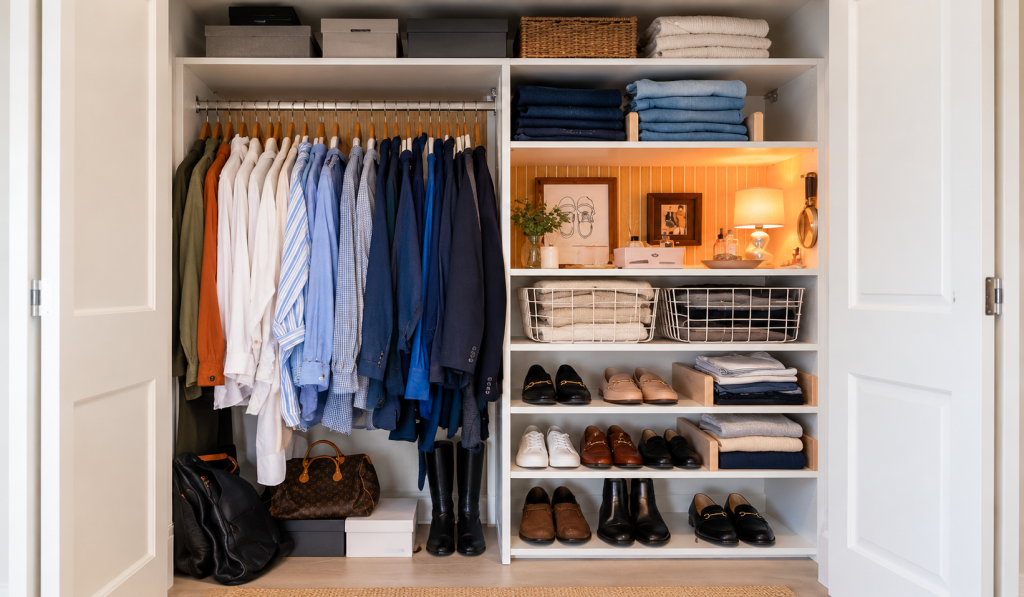
Not every garment should be stored on a hanger. Heavy sweaters and certain knitted pieces may stretch when hanging for extended periods.
Fold these items neatly and place them on shelves or inside drawers. Lightweight T-shirts and casual clothing can also be folded to save space.
Vertical folding allows you to see several garments at once without disturbing an entire stack. Choose a folding method that suits your available storage and is easy to maintain.
6. Organize Shoes and Accessories Separately
Shoes, handbags, belts, scarves, and jewelry can quickly create clutter when stored without a designated space.
Use shelves, baskets, drawer dividers, or simple organizers to separate different accessories. Frequently worn shoes should remain easily accessible.
Store delicate handbags carefully to help maintain their shape. Small jewelry organizers can prevent necklaces from tangling and earrings from getting lost.
7. Create a Seasonal Clothing Rotation
Seasonal organization can make your wardrobe feel less crowded, especially when storage space is limited.
During warmer months, keep lightweight dresses, shorts, and breathable tops within easy reach. Store bulky winter clothing in clean, appropriate containers when unnecessary.
Before storing seasonal garments, make sure they are clean and completely dry. Label containers so you can locate items when temperatures change.
8. Make Everyday Essentials Easy to Reach
Your most frequently worn clothing should occupy the most convenient areas of your closet.
Keep everyday shirts, jeans, workwear, and comfortable shoes at accessible heights. Reserve higher shelves for occasional items or seasonal accessories.
Consider preparing a small section for complete outfit combinations. This can be especially useful during busy mornings when you have limited time.
9. Avoid Common Closet Organization Mistakes
One common mistake is purchasing storage containers before evaluating available space. Oversized organizers may create additional clutter instead of improving functionality.
Another mistake is keeping excessive clothing simply because it might become useful someday.
Avoid creating complicated systems that require constant rearranging. Simple categories and accessible storage usually make long-term maintenance easier.
10. Maintain Your Organized Closet Every Week
Closet organization works best when it becomes part of your regular routine rather than a one-time project.
Spend a few minutes each week returning clothing to its designated place, folding misplaced garments, and reviewing frequently used sections.
When purchasing new clothes, consider whether they coordinate with your existing wardrobe and whether you have enough storage space. Small maintenance habits can prevent clutter from accumulating again.
Create a Closet That Makes Everyday Dressing Easier
A well-organized closet isn’t about having expensive furniture, matching storage boxes, or a perfectly arranged wardrobe. It’s about creating a practical system that helps you find your favorite clothes, plan outfits, and enjoy getting dressed.
Start by decluttering, organizing clothing into categories, and making frequently worn pieces easy to access. Adjust your system according to your available space and lifestyle.
With thoughtful organization and simple habits, your closet can become a functional, welcoming space that makes everyday fashion more enjoyable.

 How to Get Free SHEIN Products Through the Free Trial Center <p style=' font-weight: normal; line-height: 1.9rem !important; font-size: 17px !important;'> Substituir Remover SHEIN's Free Trial Center allows eligible shoppers to apply for selected products and review them after delivery. See the steps and requirements. </p>
 How to Look Expensive Without Spending a Fortune <p style=' font-weight: normal; line-height: 1.9rem !important; font-size: 17px !important;'> Looking elegant doesn’t have to be expensive. Discover simple fashion tips to create sophisticated outfits, elevate your style, and look polished on any budget. </p>
 How to Mix Prints and Patterns Without Overdoing It <p style=' font-weight: normal; line-height: 1.9rem !important; font-size: 17px !important;'> Discover easy ways to mix prints, colors, and patterns for stylish, balanced outfits. </p>