

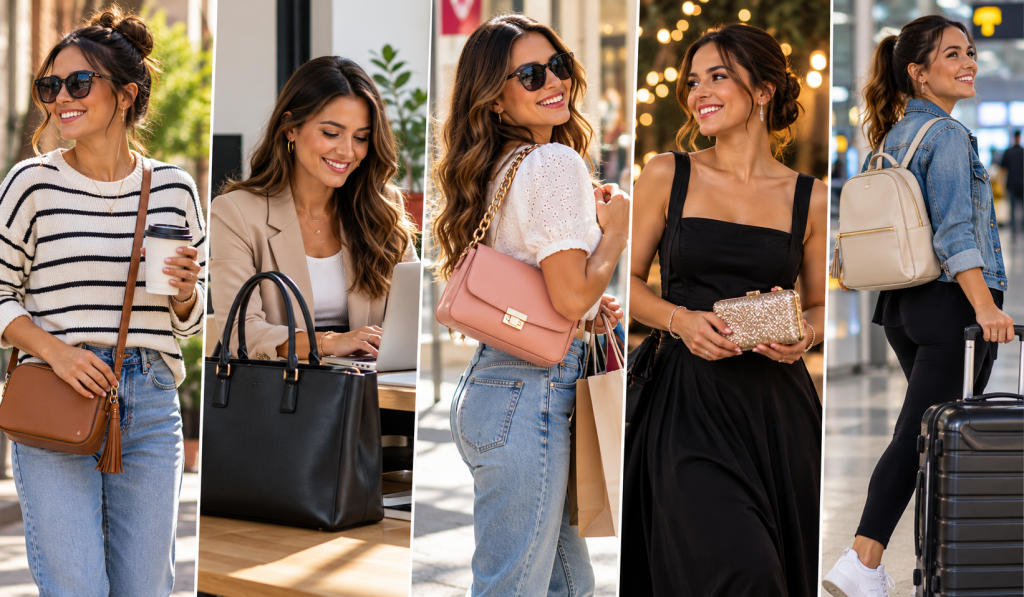
A handbag is more than a practical accessory. It can transform an ordinary outfit, add personality to your appearance, and make everyday activities more convenient.
From casual crossbody bags to elegant evening clutches, choosing the right handbag involves balancing style, functionality, and comfort. Understanding different designs, materials, and sizes can help you find beautiful options without spending unnecessarily.
1. Understand the Different Types of Handbags
Before choosing a handbag, it’s helpful to understand the most popular styles and how they fit different lifestyles.
Tote bags offer generous space for everyday essentials, making them practical for work, shopping, and travel. Crossbody bags provide hands-free convenience, while shoulder bags create a classic, versatile appearance.
Clutches and mini bags are popular for special occasions when carrying only a few essentials. Structured handbags offer a polished look, while relaxed designs complement casual outfits.
2. Choose the Right Handbag for Everyday Use
An everyday handbag should combine comfort, durability, and enough storage for your routine. Consider what you normally carry, including your phone, wallet, keys, and personal items.
Medium-sized crossbody bags and shoulder bags are practical choices because they provide accessibility without feeling excessively bulky.
Look for adjustable straps, secure closures, and useful compartments. Neutral colors such as black, tan, beige, and brown coordinate easily with different outfits.
3. Find Elegant Handbags for Formal Occasions
Weddings, dinners, parties, and formal celebrations often call for smaller, more refined accessories that complement elegant clothing.
Clutches, compact shoulder bags, and structured mini handbags work beautifully with dresses, tailored suits, and sophisticated evening outfits.
Metallic finishes, satin textures, and subtle decorative details can add elegance. However, avoid choosing an overly complicated design that competes with your clothing.
A simple handbag in a complementary color can complete your look without becoming the center of attention.
4. Select Practical Handbags for Work
Professional handbags should offer functionality while maintaining an organized appearance. Structured totes and spacious shoulder bags are especially useful for office environments.
Consider whether your bag needs to accommodate a laptop, documents, notebook, or other work essentials. Reinforced handles and comfortable straps can make daily commuting easier.
Classic shades such as navy, chocolate brown, black, and taupe complement professional wardrobes. Choose materials that are easy to maintain and suitable for frequent use.
5. Match Your Handbag With Your Outfit
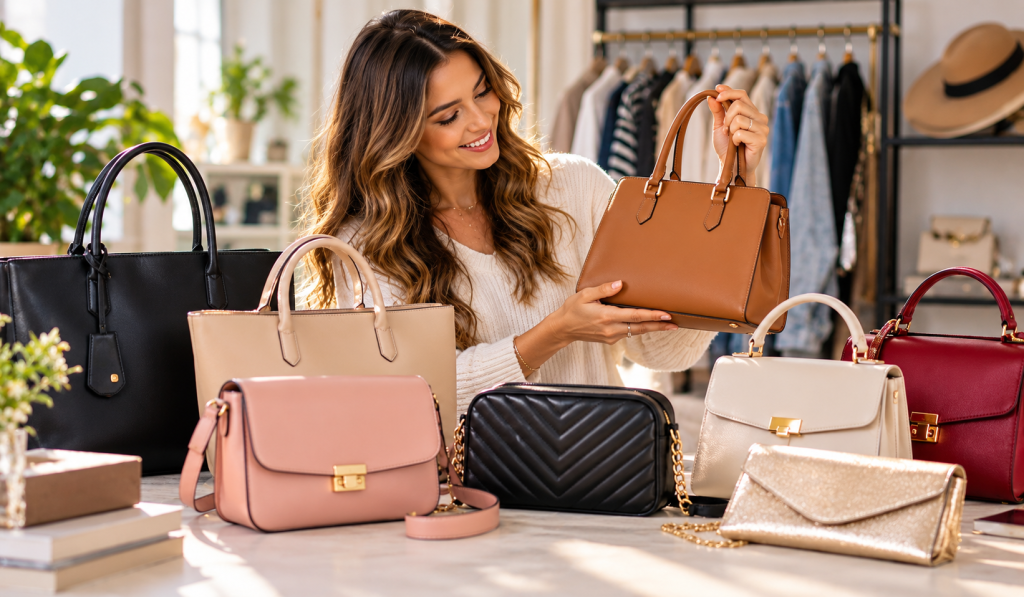
Matching handbags with clothing doesn’t require following strict fashion rules. Instead, focus on creating balance between colors, textures, and proportions.
A neutral handbag can complement colorful outfits, while a bright accessory adds personality to simple clothing combinations.
For example, a tan shoulder bag works beautifully with jeans and a white shirt. A burgundy handbag can introduce an elegant accent to a beige or black outfit.
Experiment with combinations that reflect your personal style rather than matching every accessory perfectly.
6. Consider Handbag Size and Proportions
Handbag size influences both comfort and the overall appearance of an outfit. Large bags provide additional storage, while smaller designs create a lighter, more streamlined look.
Choose dimensions according to your daily activities and personal preferences rather than relying on rigid fashion rules about body shape.
A compact crossbody bag may be ideal for sightseeing, while a spacious tote works better for shopping or commuting.
The most suitable handbag should feel comfortable and carry your essentials without unnecessary weight.
7. Explore Handbag Materials and Durability
Material quality plays an important role in how a handbag looks, feels, and performs over time.
Leather, faux leather, canvas, nylon, and woven fabrics offer different advantages. Canvas bags are often lightweight, while certain nylon designs provide practical water resistance.
Examine stitching, zippers, handles, and interior lining before purchasing. Strong construction can help a handbag withstand regular use.
Follow cleaning and storage recommendations to maintain its appearance and extend its useful life.
8. Choose Handbag Colors That Never Go Out of Style
Classic handbag colors remain popular because they coordinate with many wardrobe combinations.
Black offers versatility for casual and formal occasions, while tan and brown create warmth. Beige, cream, and taupe provide softer alternatives.
If you enjoy colorful accessories, consider burgundy, forest green, or navy. These shades can introduce personality while remaining relatively easy to style.
Choose colors that complement clothing you already own instead of purchasing accessories for outfits you rarely wear.
9. Find Stylish Handbags Without Overspending
A beautiful handbag doesn’t need an expensive designer label. Affordable retailers, outlet stores, and secondhand platforms offer numerous options.
Before purchasing, compare materials, construction, functionality, and price. Avoid buying a bag simply because it’s trending or heavily discounted.
Investing in versatile designs that suit several occasions can provide better long-term value than collecting handbags with limited practical use.
Find a Handbag That Reflects Your Personal Style
The perfect handbag combines practicality, comfort, and an appearance that complements your wardrobe.
Whether you prefer minimalist shoulder bags, spacious totes, or elegant clutches, focus on designs that suit your lifestyle and everyday needs.
By considering size, materials, colors, and versatility, you can choose accessories that make dressing easier and help create stylish outfits for years to come.

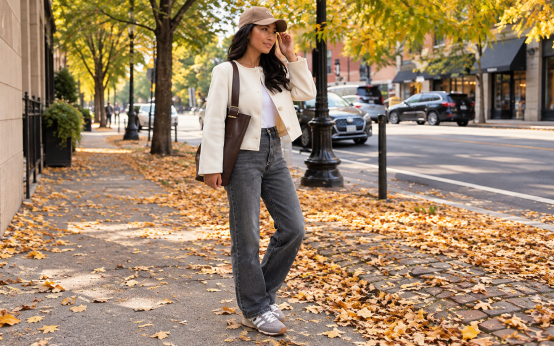 How to Style Sneakers With Dresses, Jeans, and Everyday Outfits <p style=' font-weight: normal; line-height: 1.9rem !important; font-size: 17px !important;'> Explore stylish ways to wear sneakers with dresses, jeans, and casual outfits while staying comfortable and fashionable every day. </p>
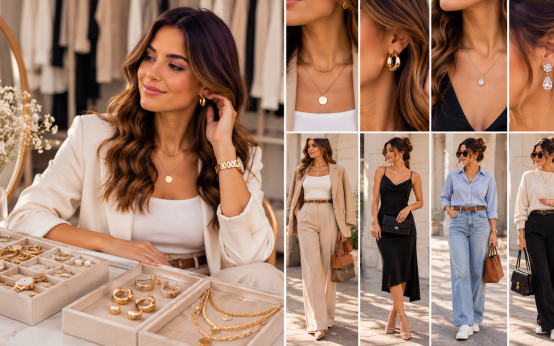 How to Choose the Right Jewelry for Your Outfit <p style=' font-weight: normal; line-height: 1.9rem !important; font-size: 17px !important;'> Discover simple ways to match jewelry with your outfits and create elegant, stylish looks for any occasion. </p>
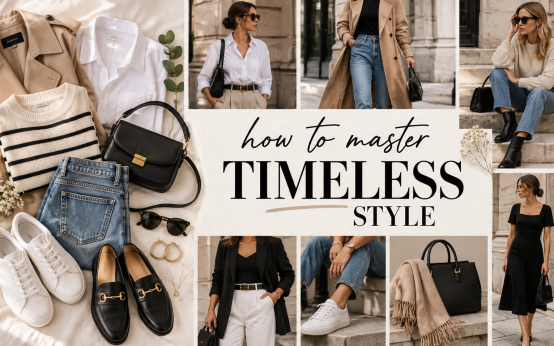 Timeless Fashion Essentials: Clothes You Can Wear for Years <p style=' font-weight: normal; line-height: 1.9rem !important; font-size: 17px !important;'> Learn how to build a stylish, versatile wardrobe with classic pieces that never go out of fashion. </p>